
The airline sector is a rather interesting - and the same time vexing - one when it comes to decarbonization.
Unlike many others, this sector's decarbonization choices are very limited.
In fact, right now, there is practically no avenue for commercial airlines to go for deep decarbonization.
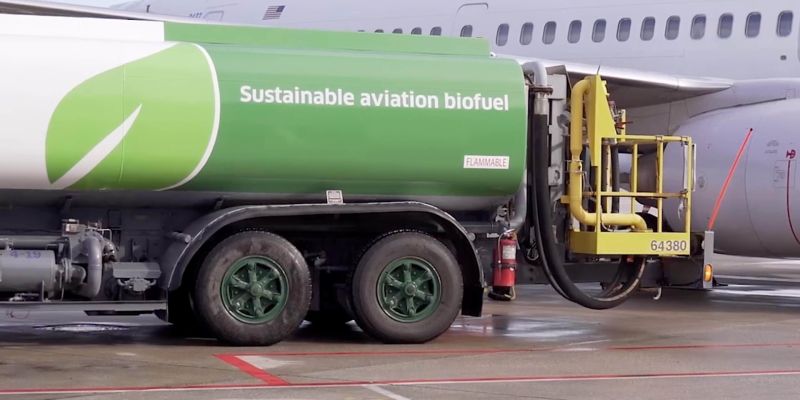
Except one – sustainable aviation fuel (SAF).
SAF is an aviation fuel similar to jet fuel that is used today, but one produced from sustainable and renewable sources. The net carbon footprint of SAF are much lower than what they are for fossil based jet fuels.
What are the sources for SAF? – vegetable oil, used cooking oil, animal fat, and also, with some newer pathways, diverse agricultural waste.
So, what’s stopping the aviation and allied industries from investing massively into producing SAF at scale, with so many sources to play with?
Two key challenges:
=> One, the technology and economics of all SAF pathways are still emerging – especially pathways that use "waste" feedstock such as biomass gasification, or the latest pathway which is ethanol to jet fuel.
=> Two, for most pathways, availability of feedstock at scale is a serious challenge. Most feedstock considered for SAF – vegetable oil including used cooking oil, municipal solid waste, ethanol feedstock – have availability bottlenecks.
One feedstock that could be available just enough is agri residues.
The world uses about 260 million tons of jet fuel a year. Using the right technologies, a 20-25% conversion (by weight) of agri residues to jet fuel is possible. If the world of agriculture is able to mobilize about a billion tons of agricultural residues, and the world of engineering is able to convert this to jet fuel economically, you and I can fly with much less guilt of CO2 emissions.
And this is where India enters.
Estimates are shaky – I have 3 different, widely different estimates – but conservatively, India currently has about 250 million tons of agri residues annually that are not utilized (some estimates put this at twice this number!).
Taking a decent fraction of this surplus to be utilized for SAF, India could perhaps supply 10% of global SAF needs.
I think that is a big deal for aviation. And also for India.
I'm not the only one who thinks it is a big deal. At our bio-energy consulting division (https://lnkd.in/gfCFHgGi ), we have had enquiries & interest on SAF production in India from a range of stakeholders - from large global conglomerates to high tech solution providers firms to large Indian engineering & EPC firms.
Having worked in the biofuels sector for over 15 years now, optimism does not readily spring in my bosom when it comes to scaling any new biofuel, but I think SAF has some interesting business cases that set it apart from many others.
(See all my decarbonization posts from 𝐍𝐞𝐭 𝐙𝐞𝐫𝐨 𝐛𝐲 𝐍𝐚𝐫𝐬𝐢 - https://shorturl.at/jx137 )